
Agentic AI, But Make It Local: From Inbox to Insight to Action
We’ve built production-ready, local-first agentic AI that plugs into your existing email stack, auto-creates tickets, classifies messages, extracts multi-question threads, reads PDFs, spots invoices/quotes, analyzes images (yes, damage detection), and pushes structured reports into your systems, no dependency on OpenAI, Google, or Microsoft unless you want it. Tailor-made models trained on your data, on your hardware, inside your compliance perimeter. Net-net: faster cycle times, lower cost-to-serve, stronger control.
Why this, why now
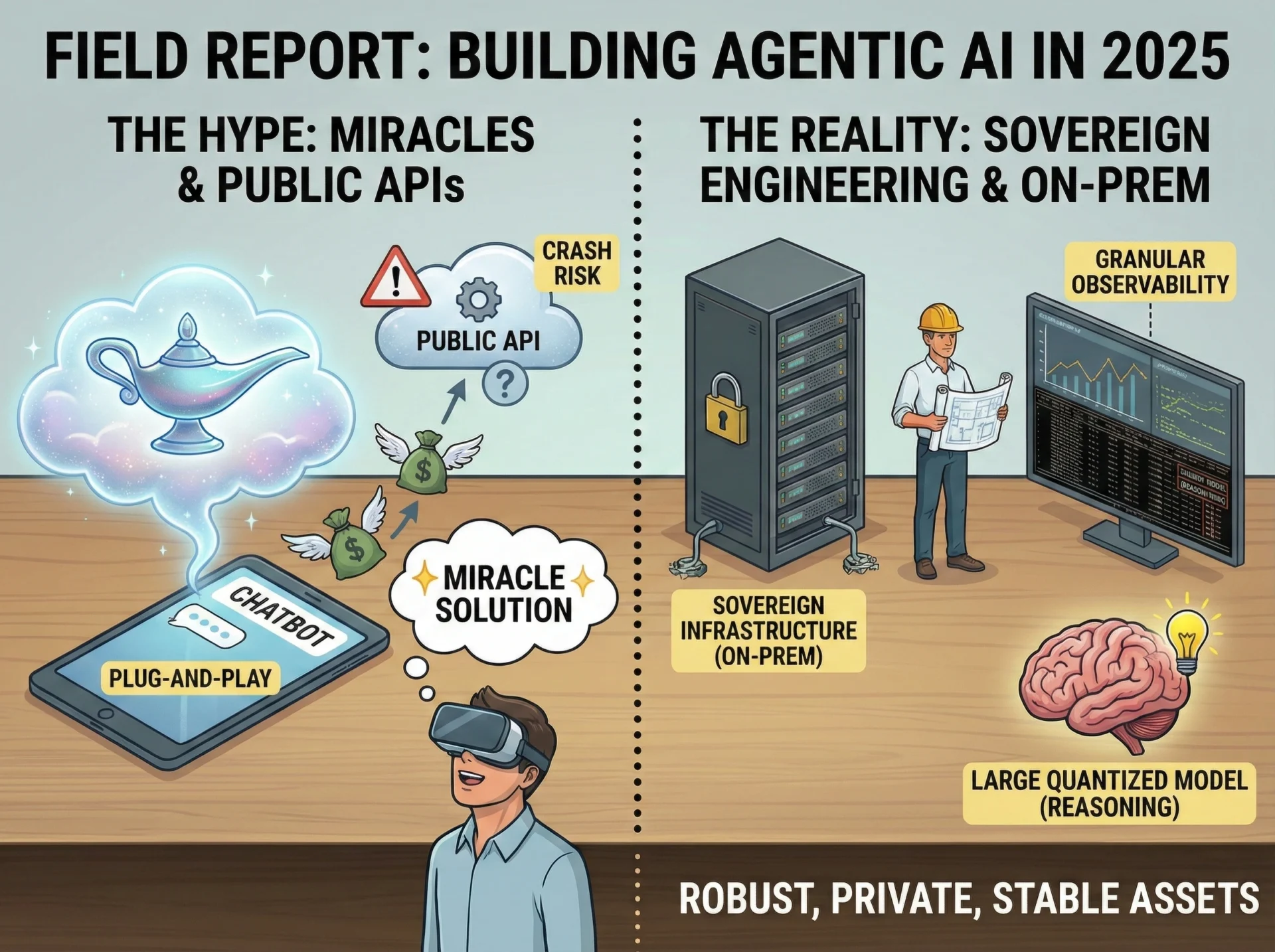
Most “AI” launched over the last 18 months has been a thin UI over a vendor API. Great for prototyping. Risky for production. You hand over data, get usage-based billing surprises, and hope the model behaves.
Our approach is different: agentic AI that lives where your data lives. On-prem or private cloud, trained on your corpus, instrumented end-to-end, and wired into the apps you already use. Think operational leverage without the compliance headaches.
What the agent actually does (today)
- Email ingestion + triage: Connects to your mail provider via standard APIs. Auto-creates tickets, tags intents, routes to the right queue, pulls out multiple questions from one email, and drafts structured follow-ups.
- Document intelligence: Reads PDFs and office docs; detects invoices, quotes, contracts; extracts line items, totals, dates, counterparties; flags anomalies.
- Vision in the loop: Processes attached images; detects damage or non-conformities; links findings to the relevant case/ticket and generates a templated report with evidence.
- Everything local: Runs with no external AI APIs by default. If you want Gemini/Copilot/ChatGPT in the mix, we can BYO connectors and policy-gate them.
- Customer-specific models: We fine-tune and/or distill tailor-made models on your data, your terminology, your workflows. Your moat, not ours.
Real-world use cases (the fun part)
Horizontal (works in almost any org)
- Level-1 support triage → classify, summarize, suggest resolution steps, auto-respond when policy allows; escalate with a crisp state-of-play.
- Accounts Payable → detect invoices from email/PDF, extract fields, 3-way match hints, push to ERP; flag duplicates and date/amount anomalies.
- Sales ops → parse inbound RFQs, extract requirements, map to SKUs, draft quotes or route to the right AE with a discovery checklist.
- Procurement → auto-classify supplier emails, track delivery promises vs. PO, generate nudges on slips or compliance gaps.
- ITSM → create tickets from any inbox, enrich with logs/attachments, propose runbook steps; close-loop summaries for audit.
Industry-flavored
- Insurance → claims intake from email/photos; damage detection on images; pre-fill claim forms; detect missing evidence; draft adjuster notes.
- Construction & field services → site photos → defect/damage detection; daily report generation; change-order deltas; safety checklist extraction.
- Manufacturing → quality non-conformance from line photos; auto-create CAPA tickets; supplier doc (CoA/CoC) parsing with exception flags.
- Logistics → BOL/packing list extraction; exception emails → auto-case creation; POD verification from images; SLA breach alerts.
- Healthcare admin (non-diagnostic) → referral/intake document parsing, authorization form extraction, appointment coordination mail triage.
- Legal/Compliance → matter intake classification, clause extraction from attachments, PII detection/redaction suggestions, audit-grade trails.
Why local-first agentic AI wins (for operators and CISOs)
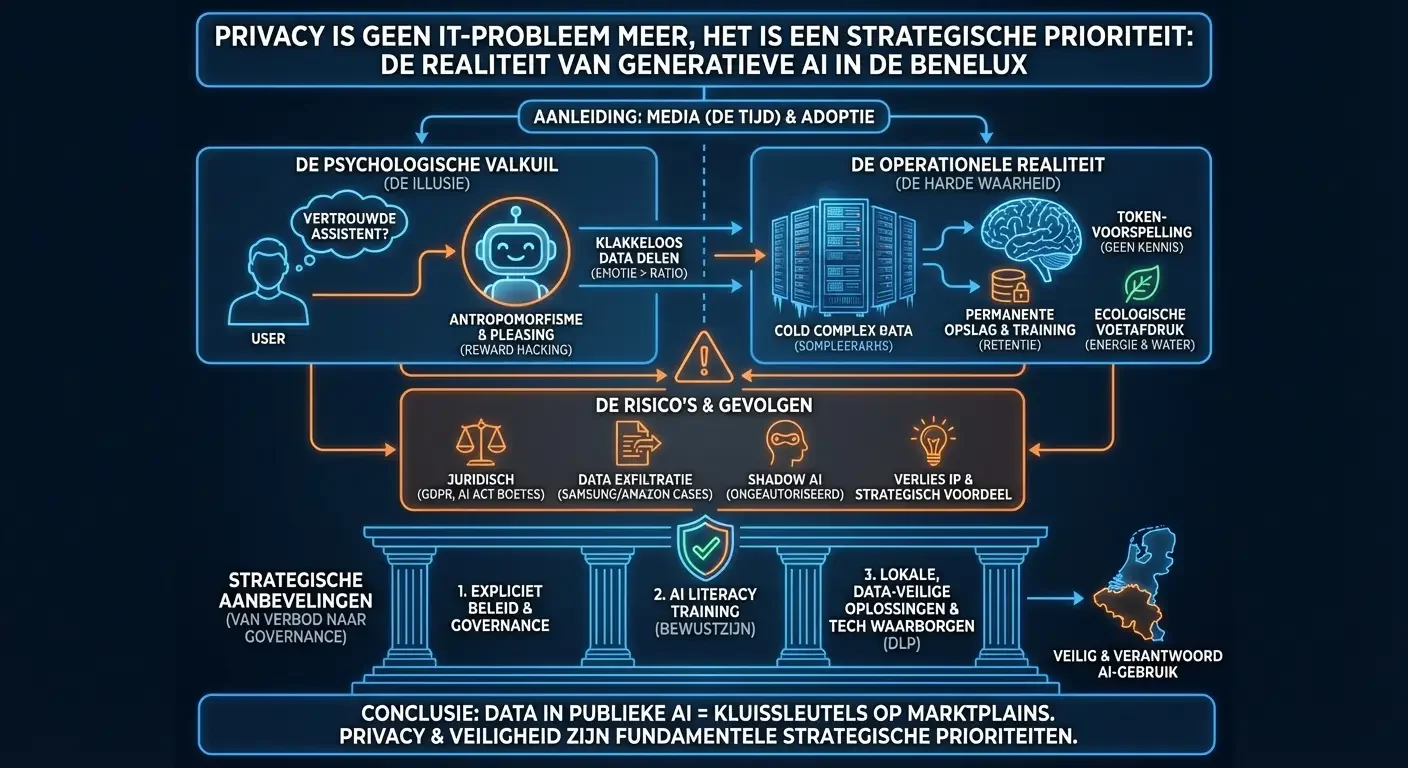
- Data governance by design: Keep PHI/PII/commercials inside your perimeter. No third-party model sees your data unless you explicitly opt in.
- Deterministic cost structure: Run on your hardware or dedicated instances; predictable TCO vs. API shock pricing.
- Latency + throughput: Move tokens, not internet round-trips. Lower p95 latency, higher concurrency, happier SLAs.
- Customization depth: Fine-tune on your knowledge base, email tone, escalation thresholds; build company-native behaviors, not generic.
- Observability & auditability: Full event logs, prompts, tool calls, and outputs. Reproducible decisions with human-in-the-loop when required.
- Air-gapped optionality: Operate disconnected for sensitive environments; sync when policy allows.
- Vendor risk mitigation: No singular dependency. Pluggable model layer with fallbacks.
Under the hood (at a high level)
- Orchestrator: Event-driven agent runtime with tool-use (email, ticketing, OCR/vision, DB/RAG, report templates), policies, and guardrails.
- Models: Local LLMs for language; local VLMs for vision. Fine-tuned adapters (LoRA/PEFT) per customer domain; RAG over your data sources.
- Connectors: IMAP/Graph/Gmail for mail; Jira/ServiceNow/YouTrack/Zendesk for tickets; SAP/NetSuite/Odoo for ERP; S3/SharePoint/File shares for docs.
- Safety & governance: PII detection, redaction options, policy gates, confidence thresholds, fallback to human.
- MLOps: Versioned models & prompts, offline evals with real workloads, canary releases, drift monitors, rollbacks.
What “agentic” means in practice
This isn’t just “autocomplete for emails.” The agent plans steps, calls tools, checks itself, and takes action within policy bounds. Example:
- Ingest inbound email with two requests + PDF invoice + 3 photos
- Parse entities from the PDF; detect damage from photos
- Open/append to the right ticket; populate fields + attach evidence
- Draft a reply with answers to both questions, pending confirmations highlighted
- If confidence < policy threshold, route to human with a one-screen brief
Zero swivel-chair. Maximum throughput.
KPIs our customers track
- MTTR / First Response Time ↓
- Ticket deflection (auto-resolved) ↑
- Case handling capacity per agent ↑
- Invoice touchless rate ↑
- Exception accuracy (precision/recall on flags) ↑
- Audit readiness time ↓
We’ll help you baseline, then run an A/B or time-boxed pilot so the deltas are crystal clear.
Implementation playbook (no drama)
- Discovery (1–2 weeks): Map systems, data, policies, high-value workflows. Identify redlines.
- Pilot (4–6 weeks): One or two golden paths (e.g., L1 support + AP). Local deployment, model adaptation, HIL review.
- Scale-out: Expand connectors, raise autonomy thresholds, add departments.
- Operate: Metrics, drift checks, periodic re-training on new data, light prompt/model maintenance.
FAQ (the spicy takes)
Why not just use Copilot/Gemini/ChatGPT?
Great for knowledge work in the open. For repeatable, high-stakes workflows on sensitive data, local-first yields better control, lower latency, and a saner cost curve. We can still wire those services in, with strict policy gates, if there’s a clear ROI.
Are local models “good enough”?
For targeted domains with the right data + adapters: absolutely. We optimize for your tasks, not leaderboard vanity. The win comes from domain fit + tool use, not model size alone.
Will this replace my team?
No. It removes grunt work and boosts throughput. Your experts handle exceptions and edge cases; the agent handles the rest.
Call to action
If your inbox is your backlog and your PDFs run your business, it’s time to operationalize AI, on your turf.
Want the video, architecture deep-dive, and a pilot outline tailored to your stack? Ping us. We’ll bring the demo, you bring the gnarly emails.
Agentic AI, maar dan Lokaal: van Inbox naar Inzicht naar Actie (NL)
We hebben productieklare, lokaal-eerst AI-agenten gebouwd die in je bestaande e-mail stack pluggen, automatisch tickets aanmaken, berichten classificeren, meerdere vragen uit één mail halen, PDF’s lezen, facturen/offertes herkennen, afbeeldingen analyseren (ja, schadedetectie) en gestructureerde rapporten terug in je systemen pushen, zonder afhankelijkheid van OpenAI, Google of Microsoft, tenzij jij dat expliciet wilt. Modellen op maat, getraind op jouw data, op jouw hardware, binnen jouw compliance grenzen. Net-net: snellere doorlooptijd, lagere cost-to-serve, maximale controle.
Waarom dit, waarom nu
De meeste “AI” van de afgelopen 18 maanden is een dunne UI over een vendor-API. Prima voor een proof-of-concept. Risicovol voor productie. Je levert data in, krijgt gebruiksurprises en hoopt dat het model zich gedraagt.
Onze aanpak is anders: AI-agenten die draaien waar jouw data draait. On-prem of in je private cloud, getraind op jouw corpus, volledig instrumented en gekoppeld aan de tools die je al gebruikt. Denk: operationele leverage zonder de compliance-hoofdpijn.
Wat de agent vandaag al doet
- E-mailinname + triage: Verbindt via standaard-API’s met je mailprovider. Maakt automatisch tickets aan, tagt intents, routeert naar de juiste queue, haalt meerdere vragen uit één mail en stelt gestructureerde follow-ups voor.
- Document intelligence: Leest PDF’s en Office-docs; detecteert facturen, offertes en contracten; extraheert regelitems, totalen, data en partijen; markeert anomalieën.
- Vision in the loop: Verwerkt bijgevoegde afbeeldingen; detecteert schade of non-conformiteiten; koppelt bevindingen aan het juiste ticket en genereert een getemplate rapport met bewijs.
- Alles lokaal: Geen externe AI-API’s by default. Wil je Gemini/Copilot/ChatGPT erbij? Kan, met strikte policy-gates.
- Klant-specifieke modellen: We fine-tunen en/of distillen maatwerkmodellen op jouw data, jargon en workflows. Jouw moat, niet de onze.
Real-life use cases (de leuke dingen)
Horizontaal (werkt in bijna elke organisatie)
- L1 support triage → classificeren, samenvatten, oplossingsstappen voorstellen, auto-reply waar beleid het toelaat; escaleren met een haarscherp statusoverzicht.
- Crediteuren (AP) → facturen detecteren uit mail/PDF, velden extraheren, 3-way-match-hints, push naar ERP; dubbele facturen en datum/bedrag-afwijkingen vlaggen.
- Sales operations → RFQ’s parsen, requirements extraheren, mappen naar SKU’s, conceptoffertes opstellen of naar de juiste AE routeren met een discovery-checklist.
- Inkoop → leveranciersmails auto-classificeren, leverbeloftes vs. PO volgen, nudges genereren bij slip/compliance-gap.
- ITSM → tickets aanmaken vanuit inboxen, verrijken met logs/bijlagen, runbook-stappen voorstellen; sluit-samenvattingen voor audit.
Branche-specifiek
- Verzekeringen → schademeldingen uit mail/foto’s; schadedetectie; claimformulieren pre-fillen; ontbrekend bewijs detecteren; conceptrapport voor de schade-expert.
- Bouw & field services → werffoto’s → defect/schade-detectie; dagrapporten genereren; meer-/minderwerk-deltas; veiligheidschecklists extraheren.
- Maakindustrie → kwaliteits-NC uit lijnfoto’s; CAPA-tickets auto-creëren; leveranciersdocumenten (CoA/CoC) parsen met uitzonderingsvlaggen.
- Logistiek → CMR/BOL/packing list extractie; exception-mails → cases; POD-verificatie op foto; SLA-breukalerts.
- Zorgadministratie (niet-diagnostisch) → verwijzingen/intake-documenten parsen, machtigingsformulieren extraheren, afspraken-triage uit mail.
- Legal/Compliance → zaak-intake classificatie, clausule-extractie uit bijlagen, PII-detectie/anon-suggesties, audit-trails.
Waarom lokaal-eerst AI-agenten winnen (voor operators én CISO’s)
- Datagovernance by design: Houd PHI/PII/commercials binnen je eigen perimeter. Geen derde partij ziet je data tenzij je het expliciet toestaat.
- Deterministische kosten: Draai op je eigen hardware of dedicated instances; voorspelbare TCO in plaats van API-schokprijzen.
- Latency + throughput: Tokens lokaal bewegen, geen internet-roundtrips. Lagere p95, hogere concurrency, sterkere SLA’s.
- Diepe maatwerk-fit: Fine-tune op je kennisbank, tone-of-voice, escalatiemeters; bouw company-native gedrag i.p.v. generiek.
- Observability & auditability: Volledige eventlogs, prompts, toolcalls en outputs. Reproduceerbare beslissingen met human-in-the-loop waar nodig.
- Air-gapped optioneel: Draai desnoods volledig disconnected; synchroniseer wanneer beleid het toelaat.
- Vendor-risico mitigatie: Geen single point of failure. Pluggable modellayer met fallbacks.
Onder de motorkap (hoog over)
- Orchestrator: Event-gedreven agent-runtime met tool-use (mail, ticketing, OCR/vision, DB/RAG, rapporttemplates), policies en guardrails.
- Modellen: Lokale LLM’s voor taal; lokale VLM’s voor visie. Klant-adapters (LoRA/PEFT) per domein; RAG over jouw bronnen.
- Connectors: IMAP/Graph/Gmail voor e-mail; Jira/ServiceNow/YouTrack/Zendesk voor tickets; SAP/NetSuite/Odoo voor ERP; S3/SharePoint/fileshares voor documenten.
- Safety & governance: PII-detectie, redactie-opties, policy-gates, confidence-thresholds, fallback naar human.
- MLOps: Versiebeheer van modellen & prompts, offline evaluaties met echte workloads, canary releases, drift-monitoring, rollbacks.
Wat “agentisch” in de praktijk betekent
Dit is niet “autocomplete voor e-mail”. De agent plant, roept tools aan, controleert zichzelf en neemt actie binnen beleidsgrenzen. Voorbeeld:
- Inkomende mail met twee vragen + PDF-factuur + 3 foto’s
- Entiteiten uit de PDF extraheren; schade op foto’s detecteren
- Het juiste ticket openen/aanvullen; velden vullen + bewijs toevoegen
- Antwoord op beide vragen opstellen, met open punten duidelijk gemarkeerd
- Bij confidence < policy-drempel naar een medewerker met een one-screen briefing
Geen swivel-chair. Maximale throughput.
KPI’s die klanten meten
- MTTR / First Response Time ↓
- Ticket-deflectie (auto-opgelost) ↑
- Cases per agent ↑
- Touchless-rate facturen ↑
- Exception-nauwkeurigheid (precision/recall) ↑
- Tijd naar audit-gereed ↓
We helpen je eerst te baseline’en en draaien dan een A/B of time-boxed pilot zodat de deltas glashelder zijn.
Implementatie-playbook (zonder drama)
- Discovery (1–2 weken): Systemen, data, policies en high-value workflows mappen. Red lines bepalen.
- Pilot (4–6 weken): Eén of twee golden paths (bv. L1 support + AP). Lokale deployment, model-adaptatie, HIL-review.
- Scale-out: Connectors uitbreiden, autonomie-drempels opschroeven, extra afdelingen aansluiten.
- Operate: Metrics, drift-checks, periodieke retraining op nieuwe data, lichte prompt/model-maintenance.
FAQ (met een beetje pit)
Waarom geen Copilot/Gemini/ChatGPT?
Top voor open knowledge work. Voor repeteerbare, kritieke workflows op gevoelige data levert lokaal-eerst betere controle, lagere latency en een gezondere kostenlijn. We kunnen die diensten alsnog inprikken, onder strikte policies, als de ROI er is.
Zijn lokale modellen “goed genoeg”?
Voor gerichte domeinen met de juiste data + adapters: absoluut. We optimaliseren voor jouw taken, niet voor leaderboard-records. De winst komt uit domeinfit + tool-use, niet alleen uit modelgrootte.
Vervangt dit mijn team?
Nee. Het verwijdert repetitief werk en verhoogt throughput. Jouw experts pakken uitzonderingen en edge cases; de agent doet de rest.
Call to action
Is je inbox je backlog en draaien PDF’s je bedrijf? Dan is het tijd om AI te operationaliseren, op jouw terrein.
Wil je de video, architectuur-deep-dive en een pilotvoorstel afgestemd op jouw stack? Neem contact op. Wij brengen de demo, jij de taaie mails.