
Segmentation
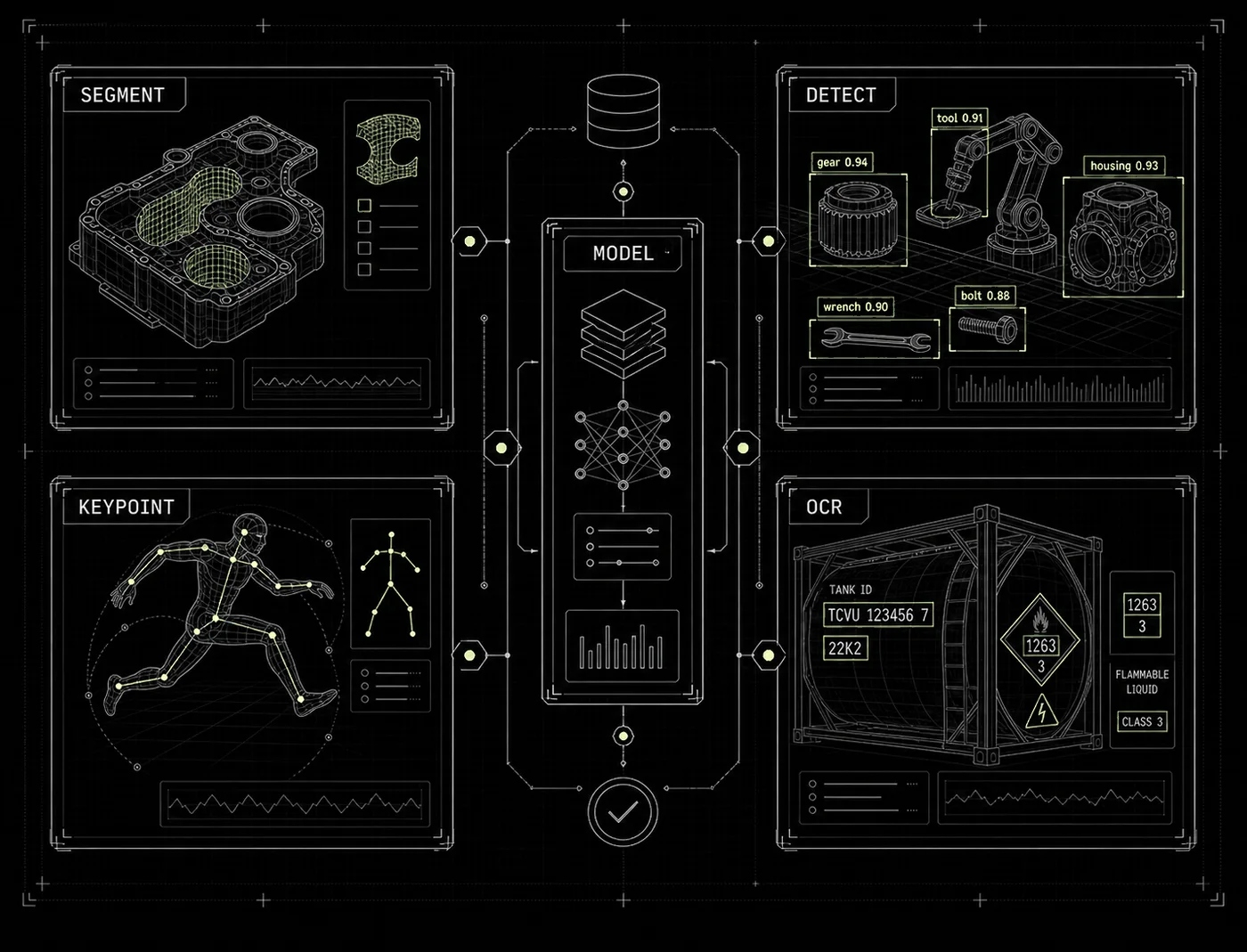
Pixel-level masks for defects, surfaces, parts, zones, and other shapes where bounding boxes are not precise enough.
IN-HOUSE MODELS FOR REAL-WORLD VISUAL WORKFLOWS.
In-house computer vision models for inspection, recognition, and visual automation.
We build practical vision systems for industrial and SME workflows, from model strategy and annotation to deployment, monitoring, and continuous improvement.
MODEL CAPABILITIES
Computer vision work succeeds when the model type, dataset, review loop, and deployment target are chosen together.
ElioVP develops task-specific models for segmentation, detection, pose and keypoint estimation, OCR, and label recognition.
Pixel-level masks for defects, surfaces, parts, zones, and other shapes where bounding boxes are not precise enough.
Detection models for components, damage, products, tools, labels, packaging, and workflow state recognition.
Pose, landmark, and geometry models for movement analysis, alignment, quality control, and creative tooling.
Read product markings, serial numbers, labels, documents, and operational identifiers from real images.
APPLIED COMPUTER VISION CASE
Industrial vision projects need more than a demo model. They need clear data capture, annotation rules, error handling, and review workflows that fit daily operations.
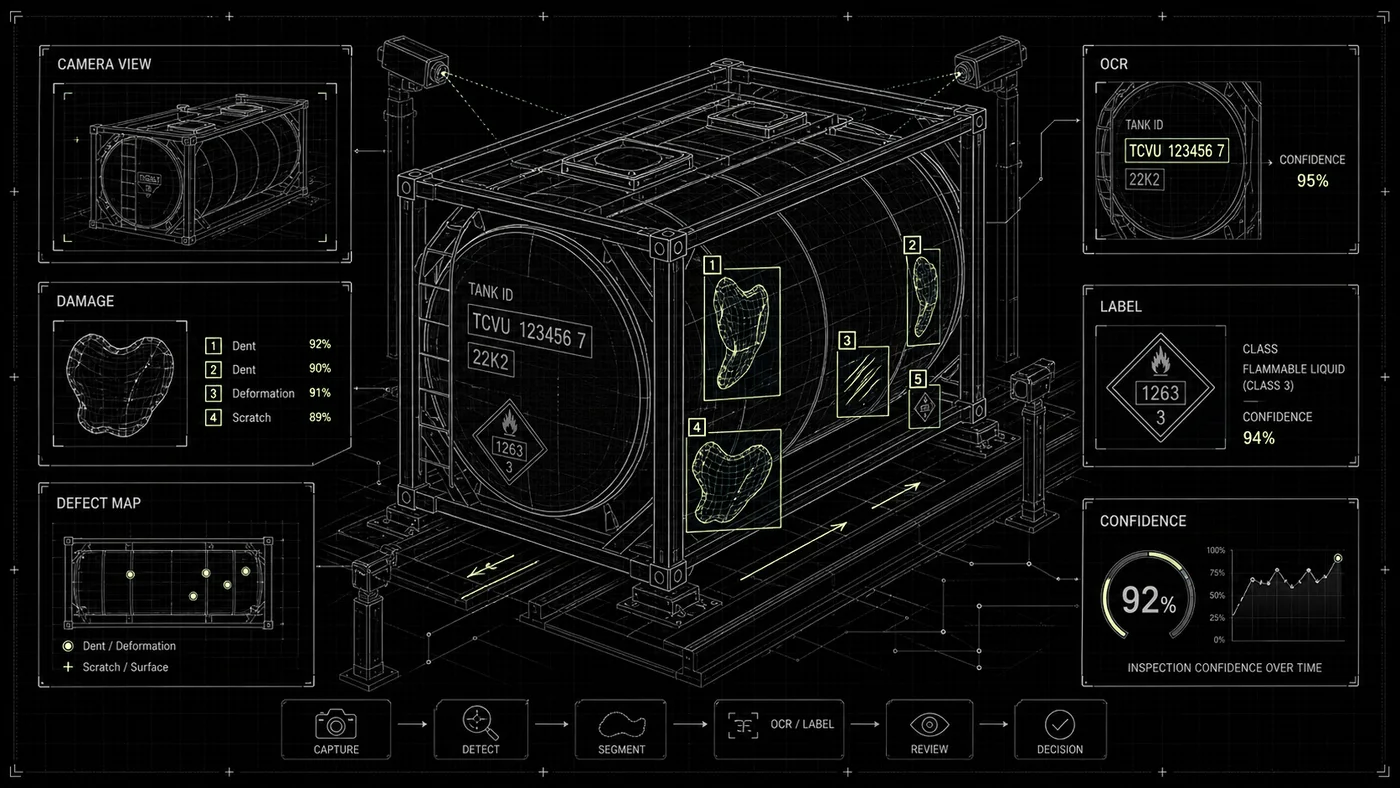
Detect dents, scratches, deformation, corrosion, missing parts, and other defined inspection targets so human reviewers can focus on the images that matter.
Recognize components, product labels, markings, and expected visual states from footage, still images, and operational capture workflows.
Extract serial numbers and operational identifiers with confidence scoring, exception handling, and review paths for uncertain reads.
DELIVERY WORKFLOW
A reliable computer vision system is an operating workflow, not only a trained model file.
Define capture conditions, target classes, edge cases, privacy constraints, and the minimum dataset needed for a useful first model.
Create annotation guidelines for masks, boxes, keypoints, OCR regions, labels, and reviewer disagreement handling.
Train and tune models against the real deployment target, including latency, hardware, and integration constraints.
Measure precision, recall, confidence thresholds, OCR quality, false positives, and failure modes before production use.
Package models into APIs, edge services, batch processors, or application workflows that fit the operational environment.
Track drift, review uncertain predictions, capture feedback, and plan retraining when the visual environment changes.
Bring a visual inspection, OCR, recognition, or content workflow challenge and we will map the dataset, model path, deployment target, and first production milestone.